Agụ Display
A dancing display typeface rooted in years of Nsibidi research.
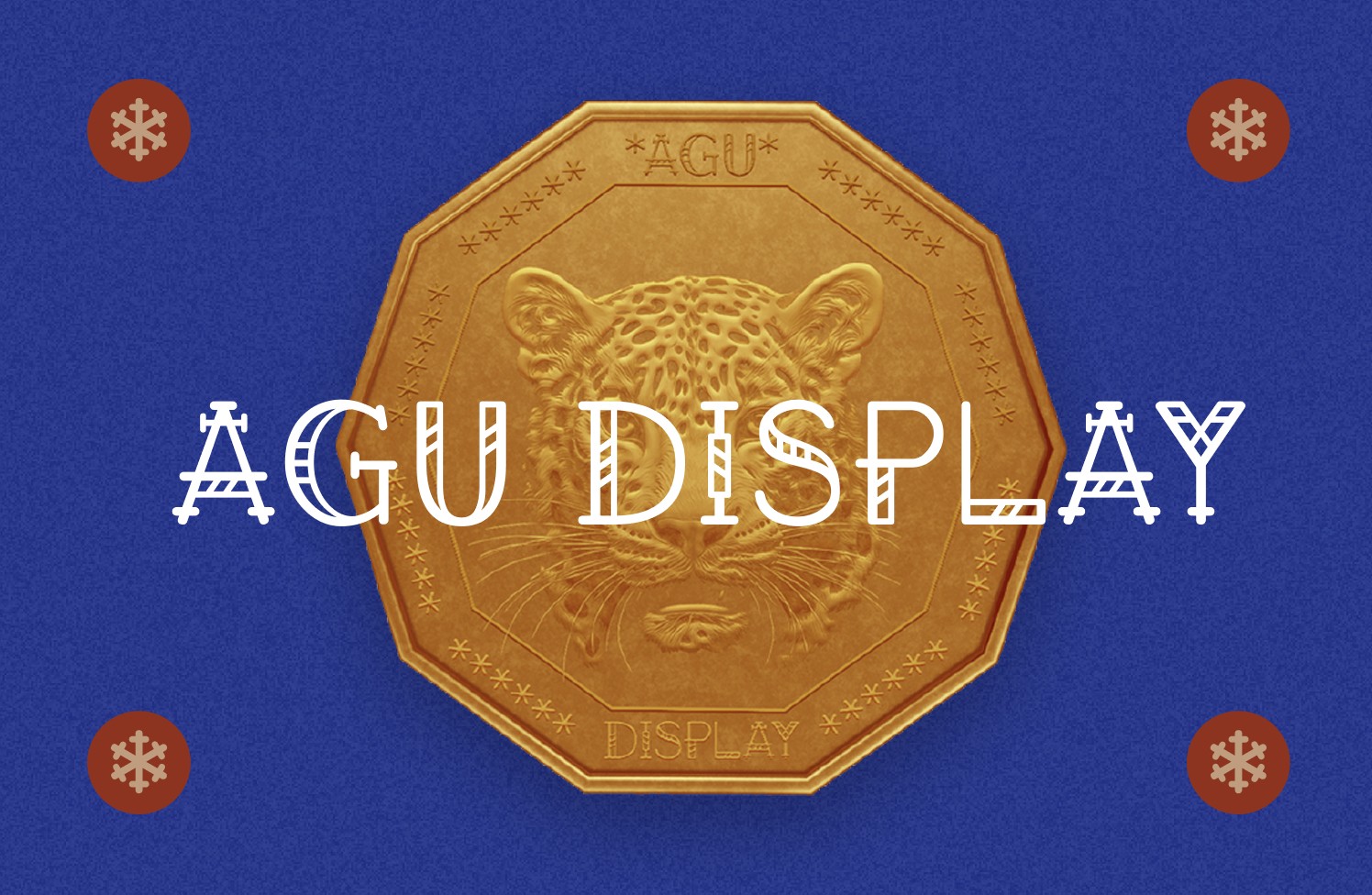
In 2023, Google Fonts commissioned me to build Agụ Display, a decorative display typeface with a substitution axis that makes the letters dance.
It brings Nsibidi, the symbol system of the Ekpe secret society, from Cross River to Cameroon, into type. Before I drew a single letter, I spent about two years exploring Nsibidi visually.
Conceptualisation
The research left me with a set of Nsibidi pictograms. I drew them on a 64px grid so they could sit side by side or stack, and that set became the library every decoration comes from.
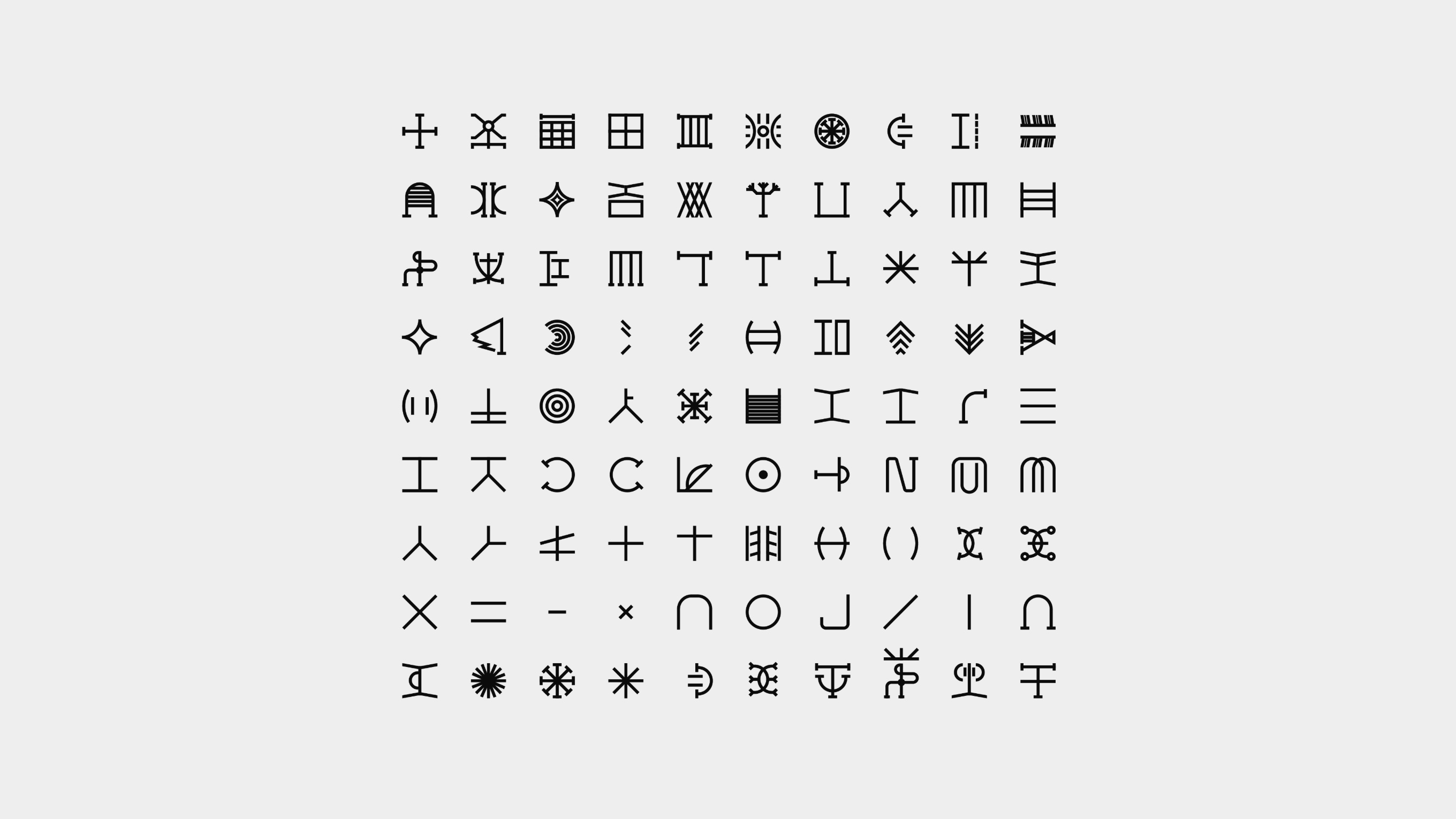
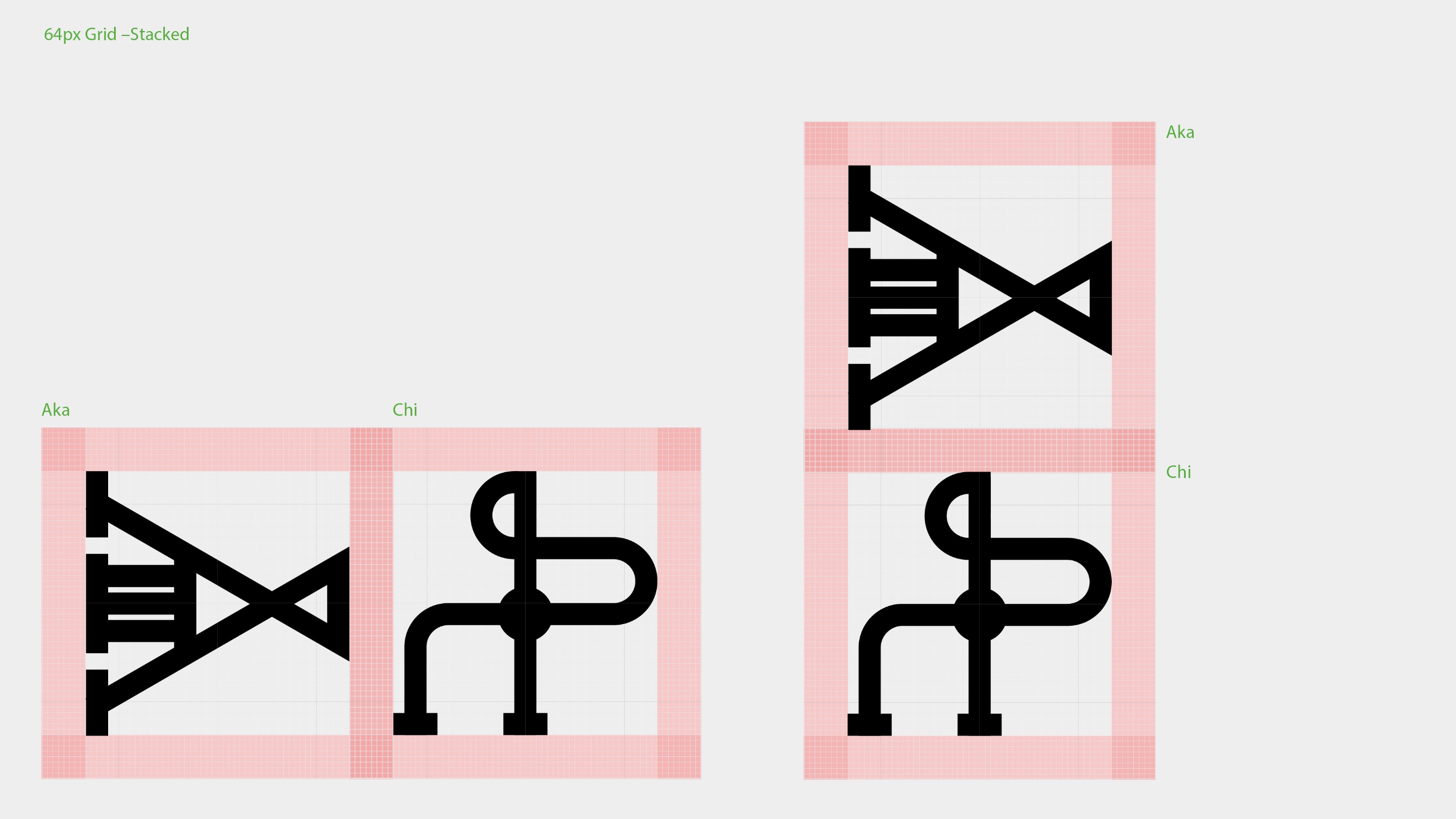
Then I drew the skeleton, a plain alphabet that stays the same in every style. Each master swaps a different group of pictograms onto it: bones, chevrons, ladders and bristles.
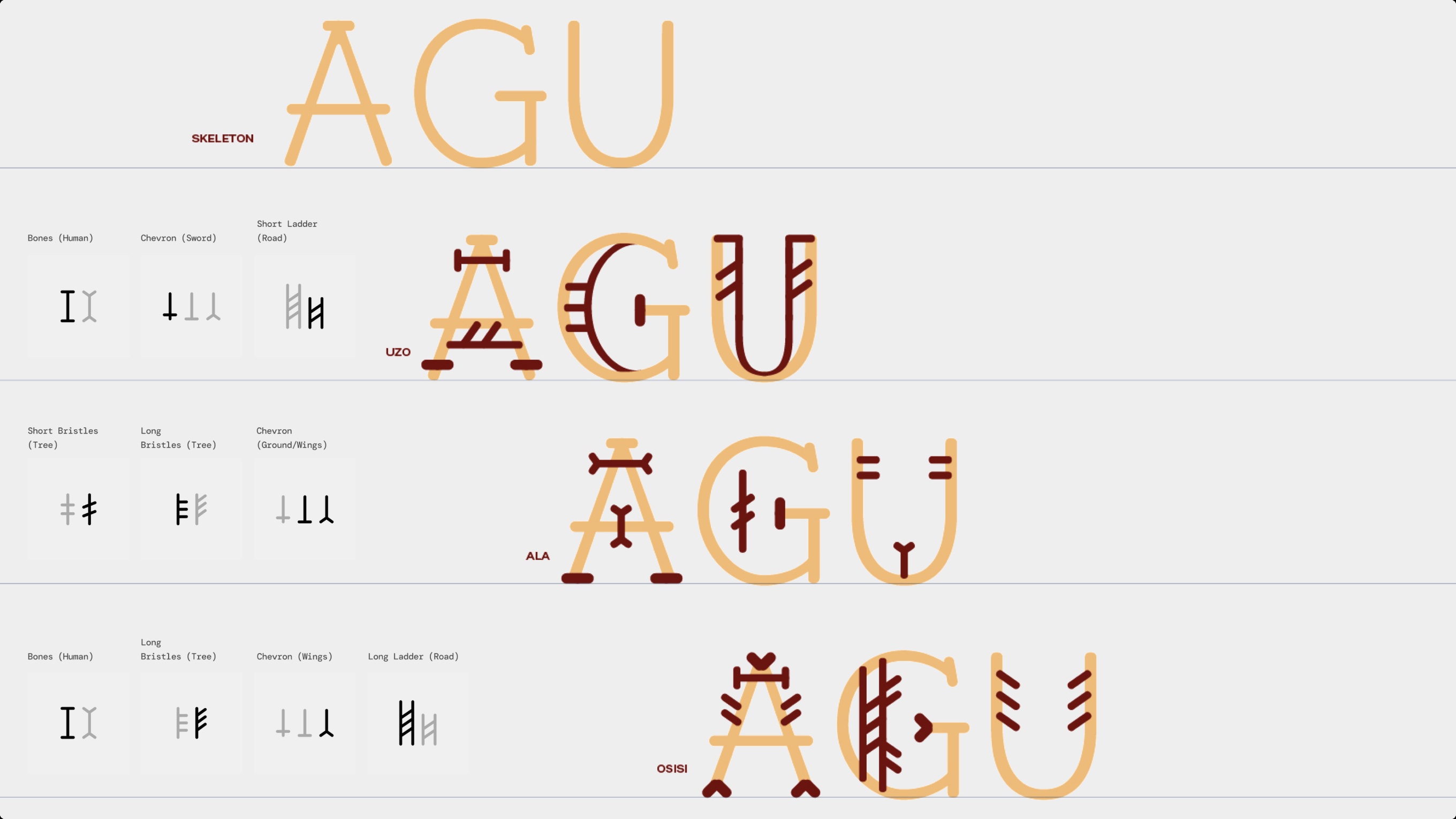
The axis works by substitution. On MORF, from 0 to 60, each master owns a range, and moving along it swaps one set of decorations for the next. It was the first variable axis of its kind.

Start with a skeleton
The base typeface is the skeleton. Every Nsibidi decoration sits on top of it.
Three masters, one axis
Agụ Display has three masters: Ụzọ, Osisi and Àlà. They morph into each other on one substitution axis, and each takes its decorations from different Nsibidi symbols.
Ụzọ
Decorated with the Nsibidi symbols for road (Ụzọ) and human (Madu), with the snake (Agwọ) and the sword (Ọpịa) on terminals, like serifs.
Ladders run inside the letters and move in a slow, sweeping motion, like a road. This style feels modern and contemporary.
Osisi
Decorated with the Nsibidi symbol for tree (Osisi), with the leopard (Agụ) and the wing (Nku) on terminals.
Bristles decorate the stems and sway like leaves on a tree. This style feels fierce and full of charisma.
Àlà
Decorated with the Nsibidi symbols for elder or chief (Mazi or Īchie) and zero (Efu). Àlà means ground, after its flat terminals.
Kebab-like lines run along the letters, a direct nod to the symbol for zero. This style feels sturdy and gentle.
The letters dance
Once the interpolation worked, I tested spacing and colour so each master still reads as its own style as the axis moves.
Stamps, stickers and motion
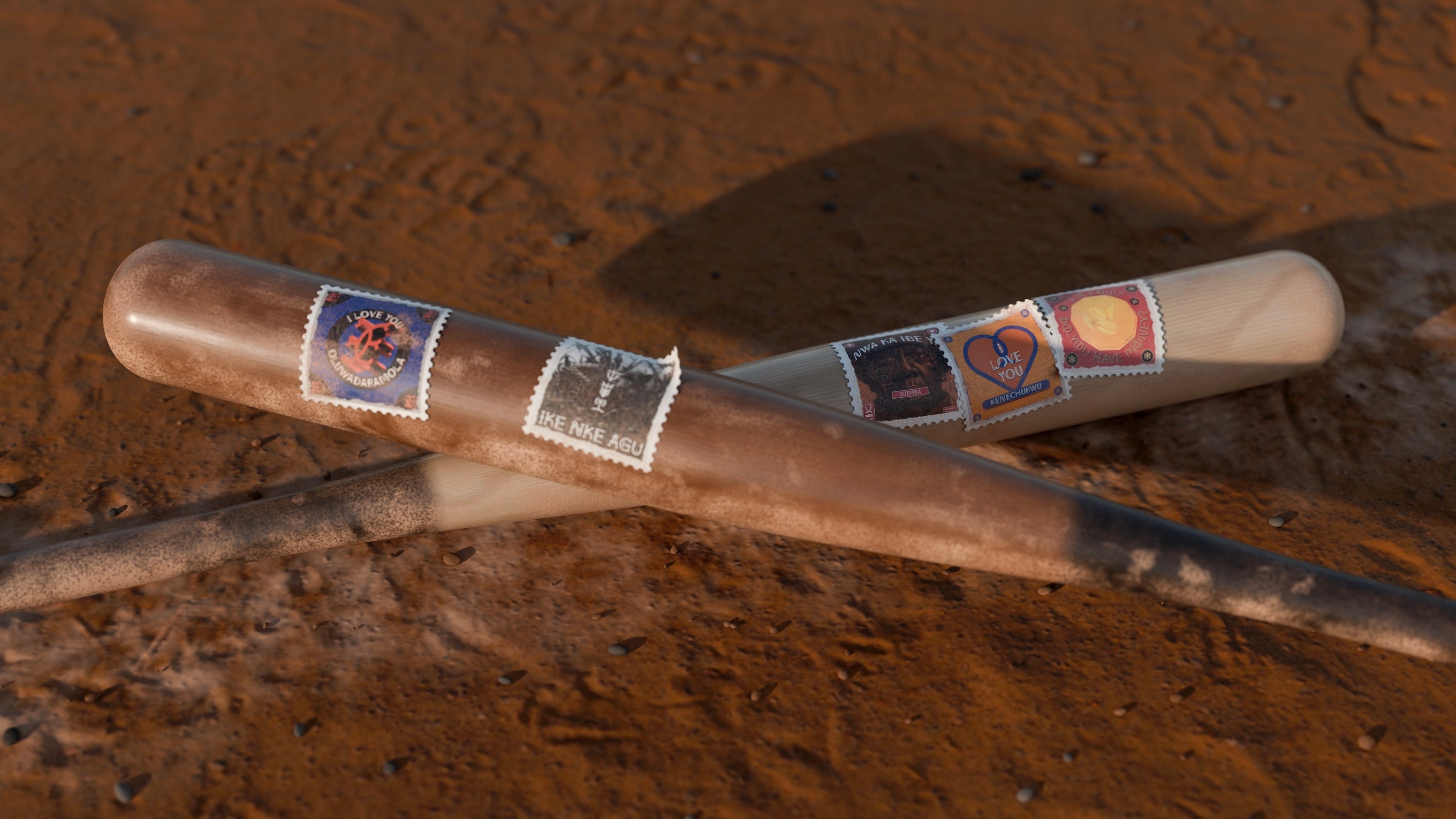
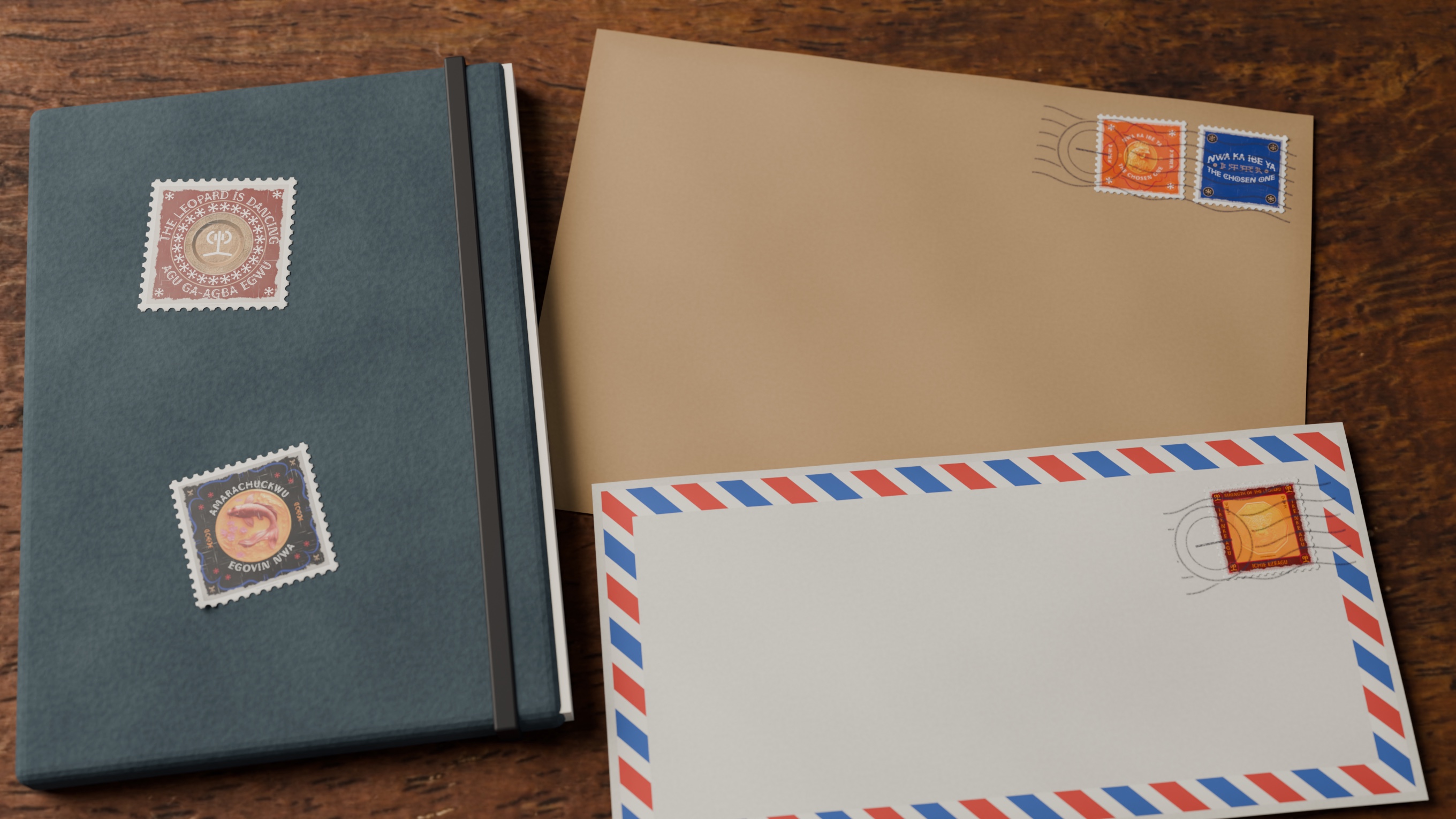
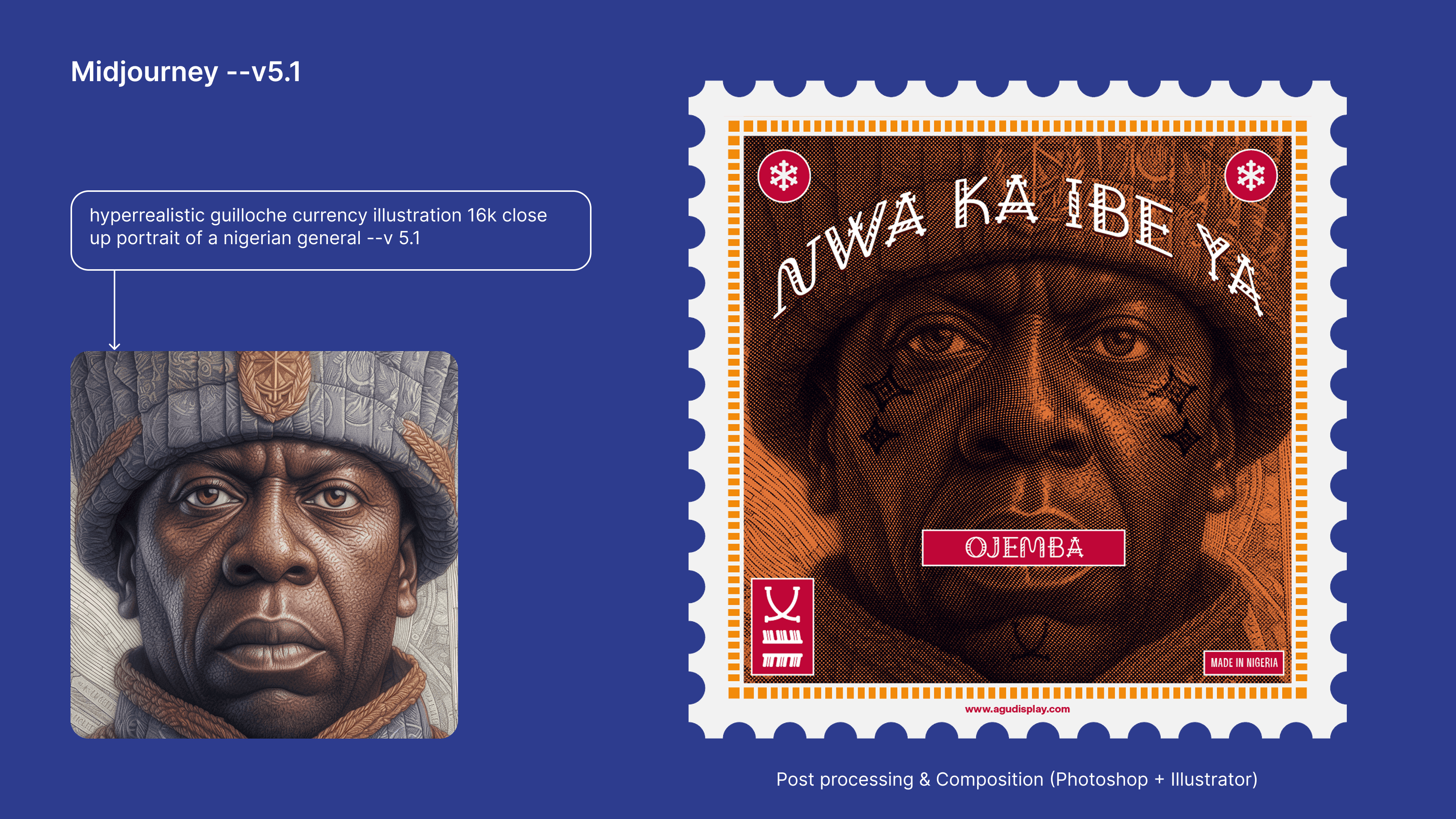
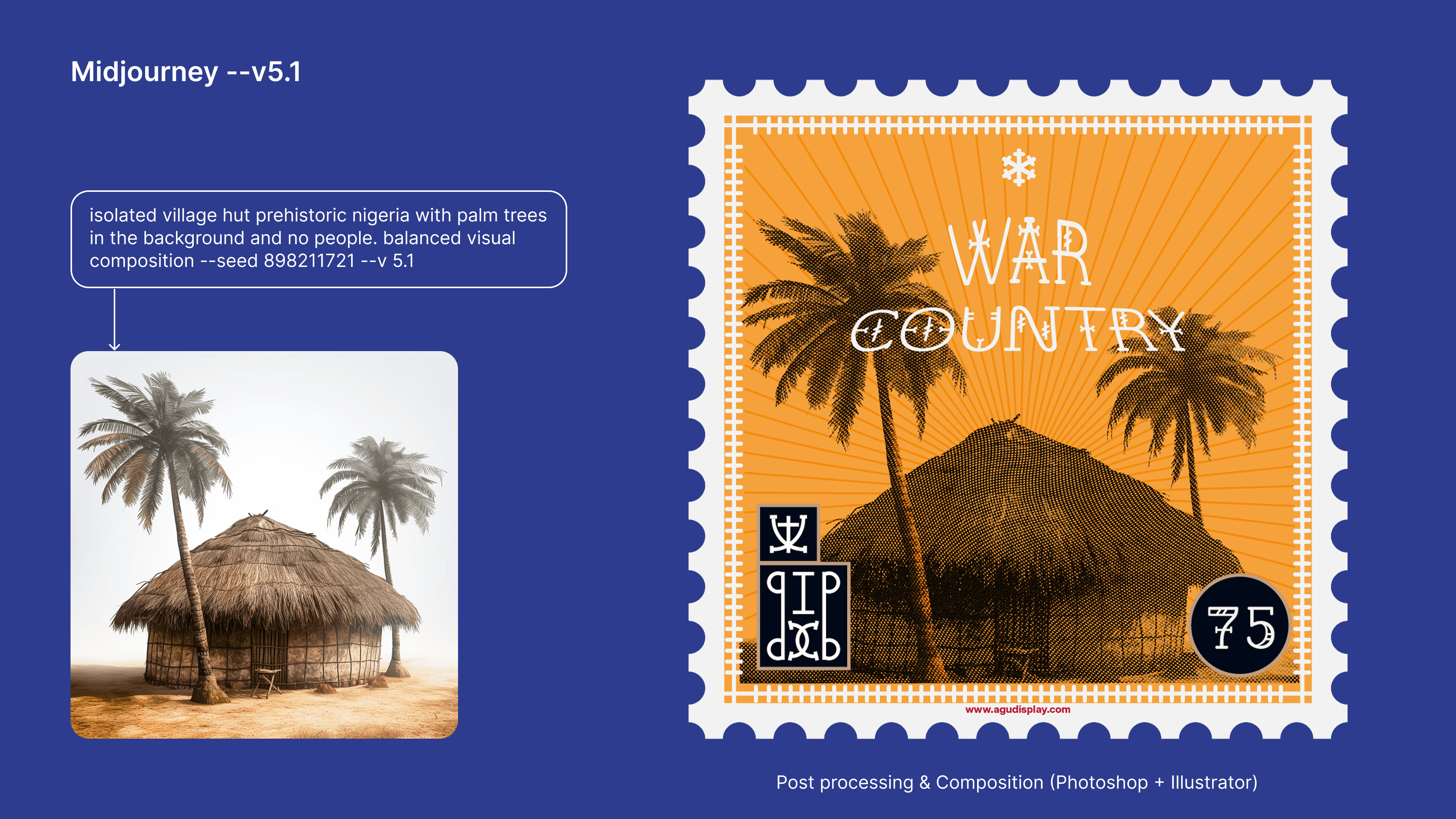
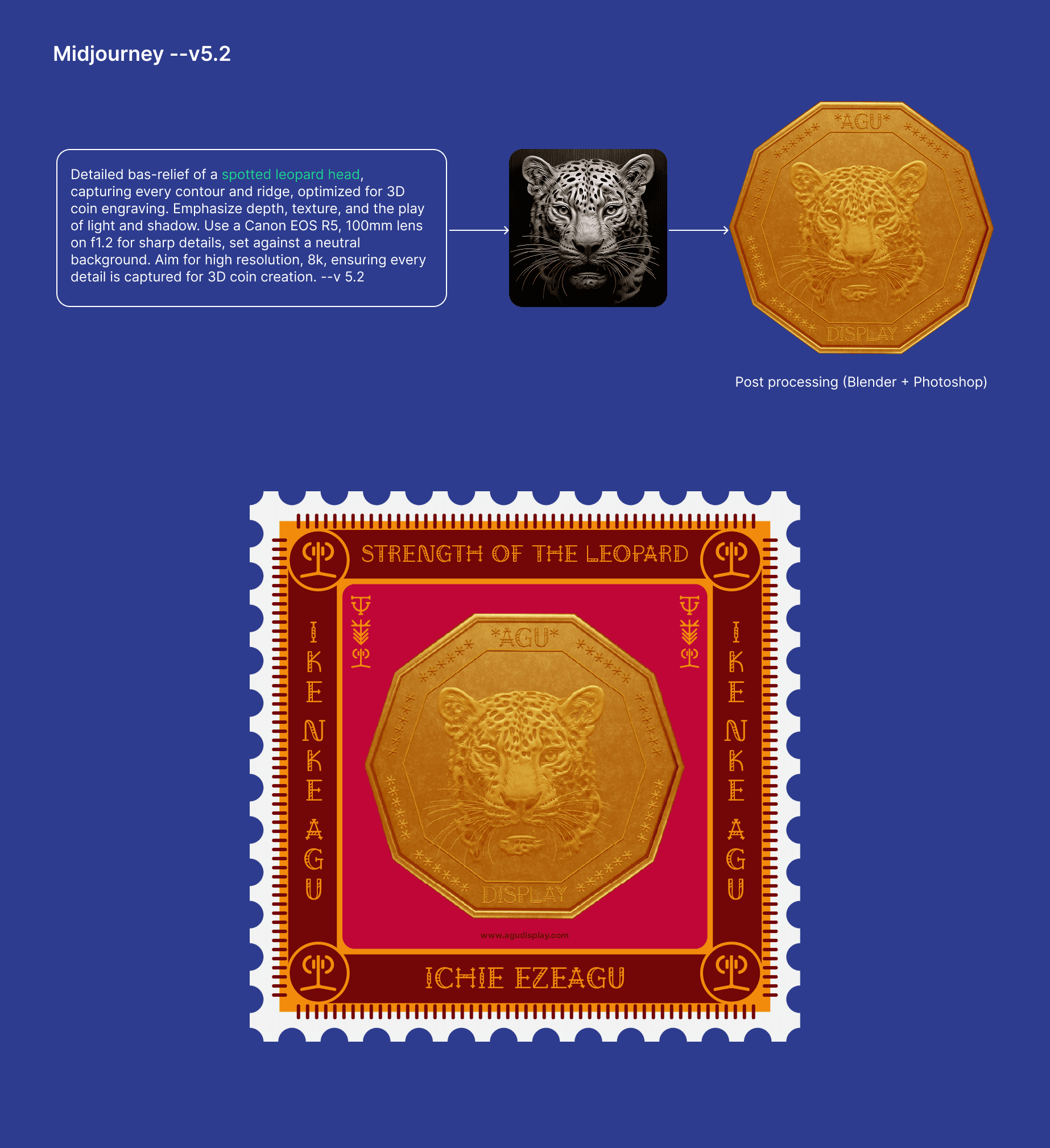
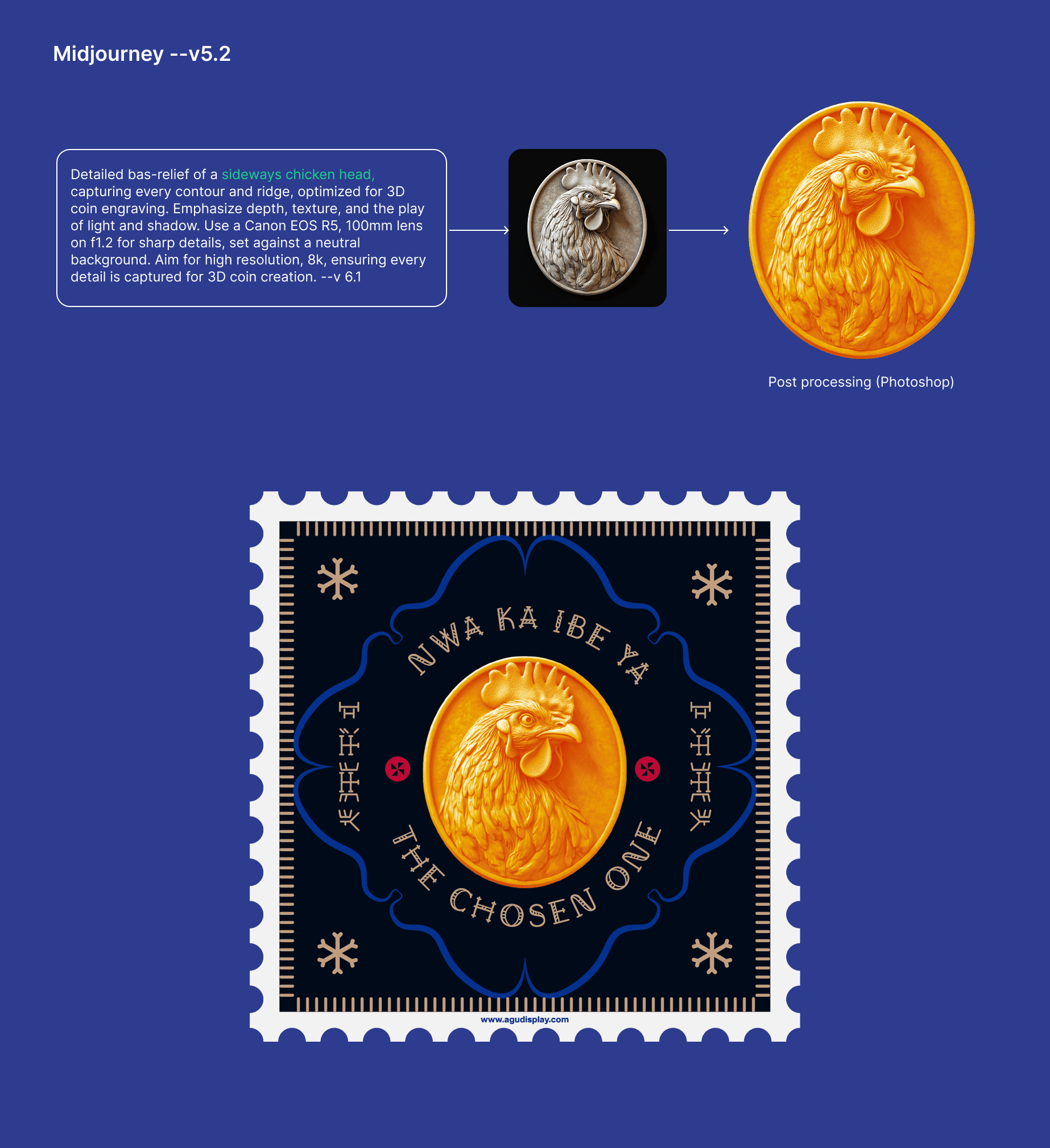
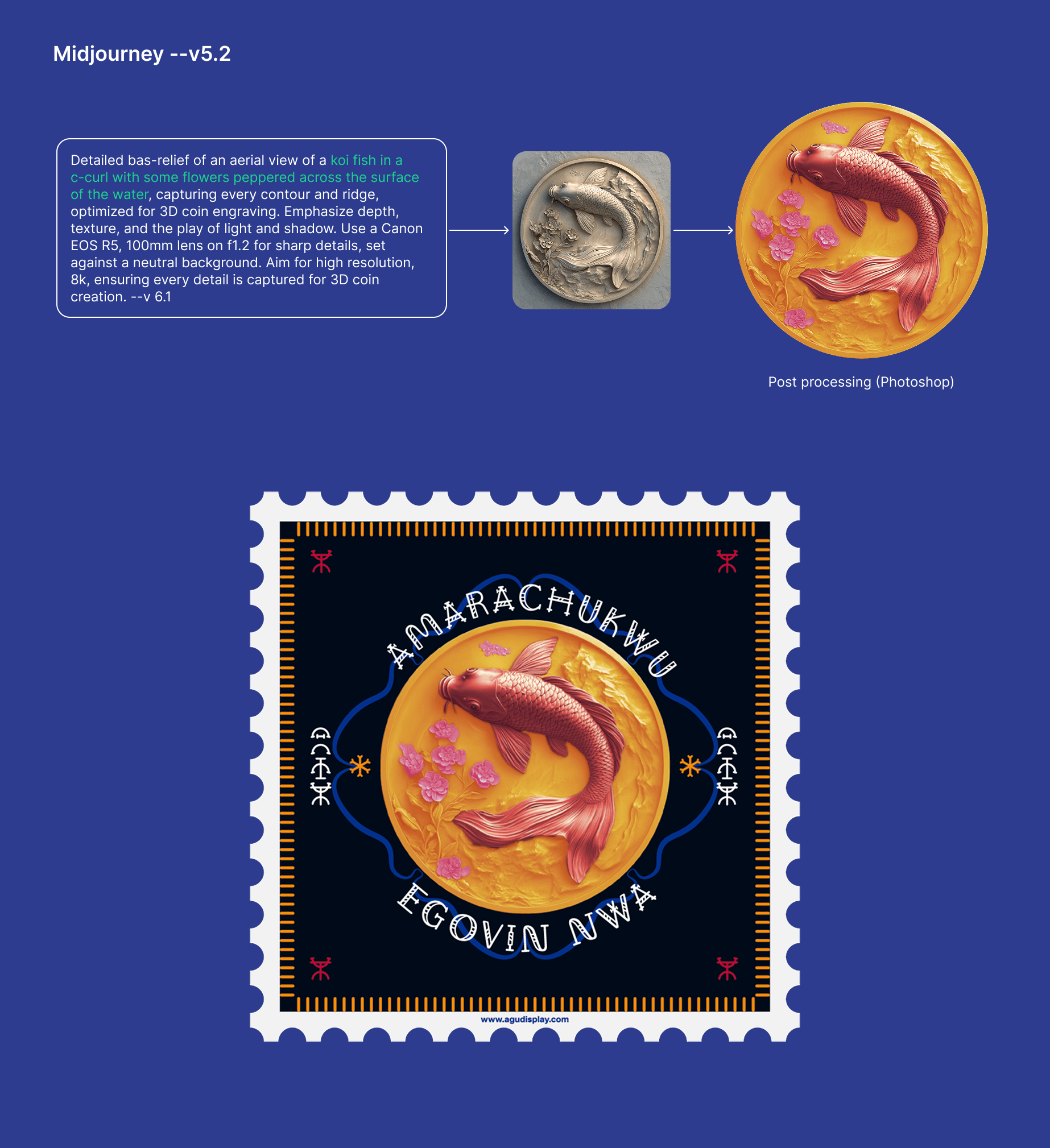
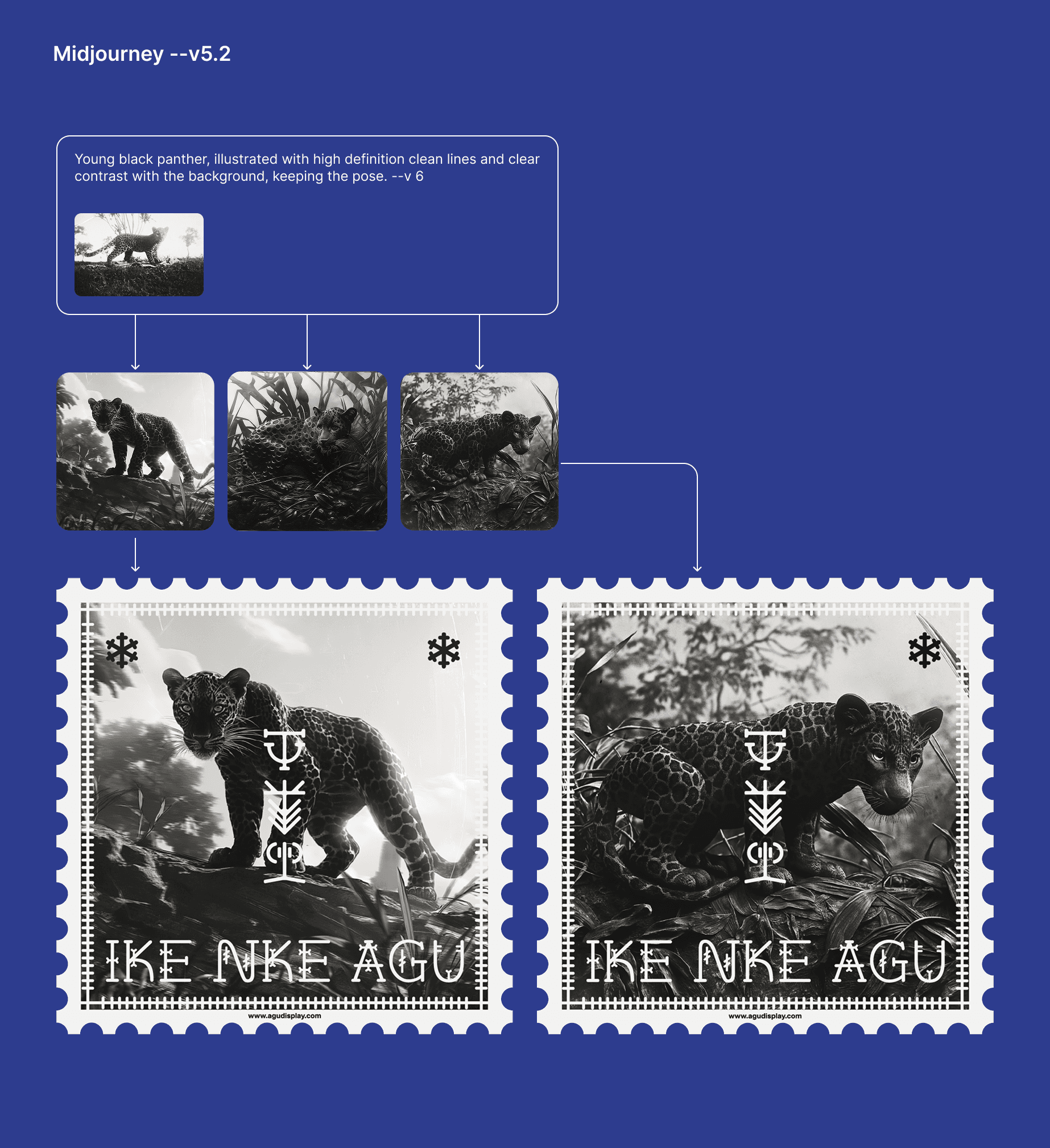
For the launch I made stamps and stickers with Midjourney and Runway, then finished every one by hand in Photoshop and Illustrator.
Release
Agụ Display launched on agudisplay.com in 2024 and joined the Google Fonts library in 2025. I led the project with guidance from the Google Fonts team.
With contributions from
Nathan Willis, Travis Kochel, Lizy Gershenzon, Agyei Archer and Jordan Williams
Special thanks
Lotanna Igwe-Odunze, Dave Crossland, Thomas Phinney, Nhung Nguyen, Rainer Erich Scheichelbauer and Uchechukwu Arinze
Website and copy
Site by Studio Null. Copywriting by Ogonna ‘Maranatha’ Nnaemeka.